What is a solar farm? The complete UK guide
Solar farms are already playing a key role in the UK’s energy system, generating reliable renewable electricity while helping strengthen energy security and support nature recovery. This blog sets out how solar farms work, how they connect to the grid and how the land is used and managed.
Contents
- What is a solar farm?
- How does a solar farm work?
- How do solar farms connect to the grid?
- How is the land used and managed?
- What are the benefits of a solar farm?
- Are there any downsides to solar farms?
- FAQs
What is a solar farm?
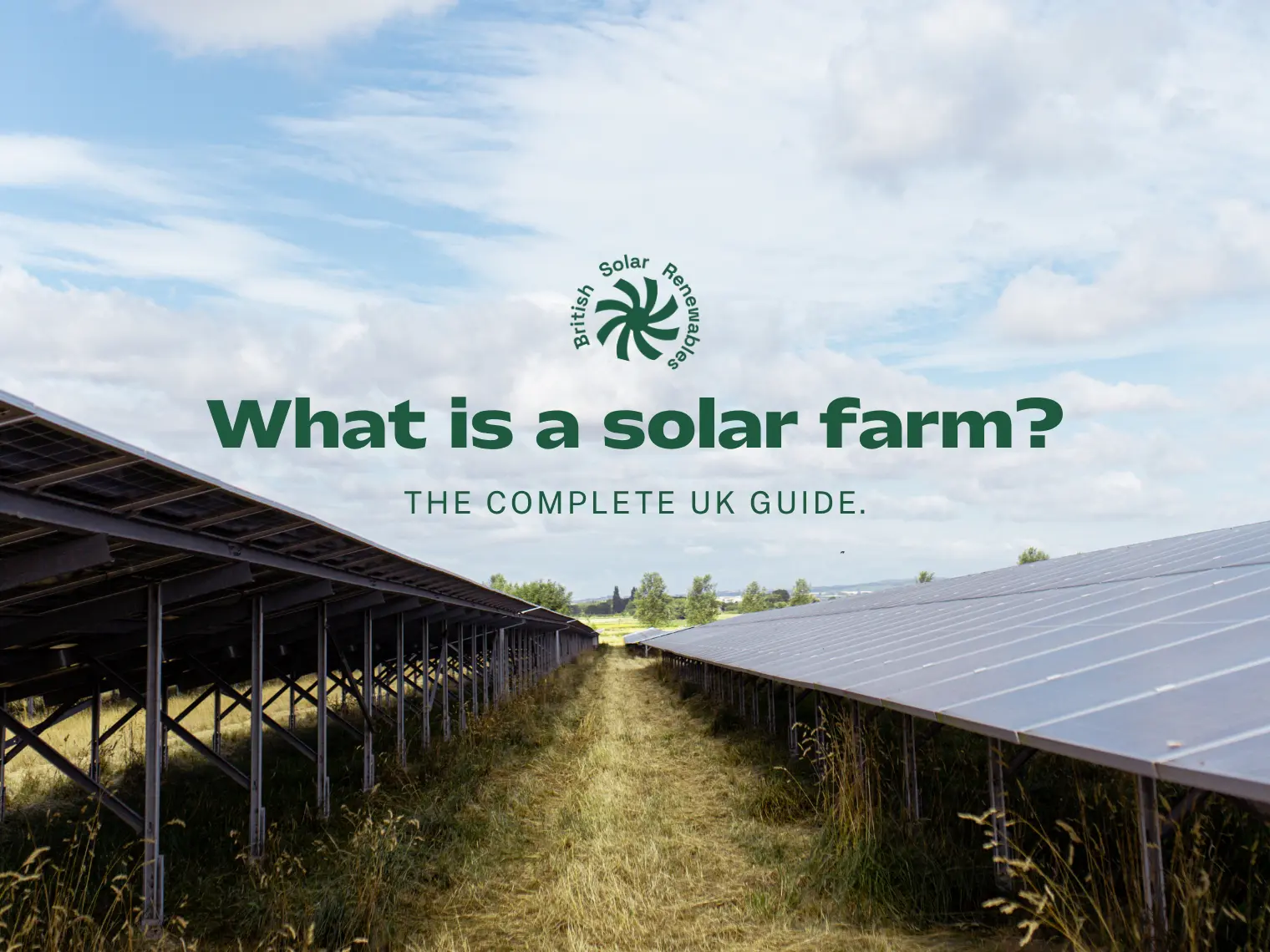
A solar farm is a large area of land covered with solar panels that use photovoltaic (PV) cells to generate electricity from the sun’s UV rays. Unlike rooftop solar, solar farms are utility-scale projects designed to send power into the wider electricity network.
Solar farms are one part of the UK’s transition to cleaner, more secure energy, generating electricity without burning fossil fuels. They are typically built on rural land, with careful site selection, design, and environmental management.
You may also hear the terms “solar park” or “solar PV site” used interchangeably with “solar farm”. While the terminology can vary between developers, planners and industry bodies, they all describe the same type of renewable energy project: a site that converts sunlight into electricity for the national network.
How does a solar farm work?
At its core, a solar farm works in a simple way. The sunlight hits the panels which contain photovoltaic cells that convert the light into direct current (DC) electricity. The power produced is then passed through inverters which convert it into alternating current (AC) which is the type of electricity that is used across the grid. This is clean, renewable energy.
Behind that simple process is the supporting infrastructure. Each panel needs to be mounted at the right angle for maximum output, cables to transfer the electricity, transformers and substations to adapt the power for transmission and monitoring systems to ensure safety and efficiency. While the panels do the visible work, this supporting infrastructure makes sure the electricity they generate can reach the grid safely and efficiently.
Output from the solar farm isn’t constant but solar technology has improved to the point that it will still produce on cloudy days throughout daylight hours, making effective grid management an important part of the energy system. This is why solar farms are increasingly paired with battery storage, helping to make the most of the electricity they generate and deliver it when demand is greater.
How do solar farms connect to the grid?
The electricity generated by a solar farm is exported into the National Grid, where it is distributed to homes, businesses and public services across the country. Unless a site has a dedicated private wire connection, the power it generates becomes part of the wider electricity network, helping to meet demand wherever it’s needed.
Connecting a solar farm to the grid requires dedicated infrastructure, usually via underground cables that link the site to a nearby substation or by connecting to existing overhead power lines and pylons.
Connecting to the grid is one of the most important parts of developing a solar farm, helping ensure renewable electricity can be delivered safely and reliably into the wider network.
How is the land used and managed?
The land within a solar farm remains actively managed throughout its lifetime. This will include the ground in and around the panels which is typically kept as grassland, managed through mowing, grazing or used for ecological enhancement depending on the site and the suitability of the area.
In many cases, sites are grazed by sheep, allowing the land to continue supporting agriculture alongside renewable energy generation. This supports one of the key commitments in our Nature Protection Pledge multi-functional land use. Beyond that, many of our wider land management practices can actively support nature. This comes in the form of wildflower planting, hedgerow enhancement, and the creation of new habitats for pollinators and other wildlife. At BSR, we go a step further, committing to a minimum 60% biodiversity net gain on every solar project we develop.
For nearby residents and landowners, solar farms are carefully planned and managed over the long term. The site will remain under active stewardship throughout its entire lifecycle, ensuring that at the end of its operational lifecycle it can be restored to its previous use.
What are the benefits of a solar farm?
The benefits of solar farms extend well beyond energy generation alone. When designed and managed well, solar farms can support energy security, nature and local communities.
- Sustainable energy – Solar farms harness the power of the sun to generate renewable electricity without burning fossil fuels. They produce clean energy at scale, supporting the UK’s transition to a lower-carbon future while helping to strengthen energy security and build a more resilient energy system.
- Land and nature – The UK is now one of the most nature-depleted countries on earth. With the right design and long-term management, solar farms can support habitat creation, biodiversity and land-management. By prioritising responsible land management, projects can enhance local wildlife habitats, improve soil health and help create more resilient ecosystems for future generations.
- Communities and the economy – Solar farms are long-term investments in the places where they operate. They can create jobs during construction, support local businesses and supply chains, and provide ongoing site management roles for decades to come. Alongside generating renewable energy, they contribute through business rates, helping local authorities invest in the services and infrastructure that communities rely on.
Are there any downsides to solar farms?
Solar farms can raise questions, particularly around land use and visual impact. During construction there is temporary activity on site, including the movement of equipment, installation works and increased vehicle traffic. Some people also have concerns about visual impact, changes to land use, and the balance between renewable energy generation and food production.
These are important considerations. That is why site selection, design and community engagement are central to how projects are delivered. Not every site is right for solar, and responsible developers work to prioritise appropriate locations, minimise visual impacts, maintain agricultural use where possible and deliver meaningful environmental improvements alongside energy generation.*
When designed and managed well, solar farms provide clean energy while supporting nature, local communities and long-term stewardship of the land. Every project BSR builds aims to leave nature better than we found it, ensuring projects deliver lasting benefits for the places in which they operate.
*Solar developments are subject to a rigorous planning process, including assessment of landscape, environmental, heritage and land-use considerations in accordance with national and local planning policy.
Where to find more information
As a leading UK independent power producer, British Solar Renewables delivers integrated renewable energy technologies to strengthen energy security, protect biodiversity, and drive the transition to net zero. To learn more about our technologies, projects and work with local communities, see here. For a broader overview of solar energy in the UK, the Government’s 2025 Solar Roadmap sets out plans for the future deployment of solar power.
FAQs
Do solar farms work in winter in the UK?
Solar is very effective in the UK as solar panels can operate efficiently even without direct sunlight. Whilst they are most effective on clear, sunny days, recent technological advancements mean they perform well on cloudy days too. This has been supported by the UK Government’s 2025 Solar Roadmap.
While output varies throughout the year, daylight hours are predictable, making solar generation a reliable part of the UK’s energy mix. Advances in machine learning make it possible to forecast energy generation (or yield) from a solar system.
Are solar farms noisy?
Once operational, solar panels themselves emit no noise. Inverters and substations generate some noise, but in a well-designed solar farm they are positioned away from nearby homes and other sensitive locations. Noise Impact Assessments are carried out during the design stage, before a planning application is submitted, to ensure equipment is located appropriately and noise levels remain within recognised standards.
Why are solar farms built in certain locations?
Every solar farm starts with one essential requirement: access to the electricity grid.
Before land is considered, developers need to understand where there is available capacity on the network to connect a project and export electricity. Grid availability varies across the country and changes over time. Many parts of the network are already constrained, which means finding suitable connection points is a key part of the site selection process.
Using information published by Distribution Network Operators (DNOs), developers can identify areas where the network may be able to accommodate new renewable energy projects. Discussions are then held with the relevant DNOs to better understand available capacity and any reinforcement works that may be required.
Once a viable grid connection has been identified, the search for suitable land begins. This means looking for sites within a practical distance of the connection point that are large enough to support the available capacity, while taking local considerations into account during the development process.
Can land still be farmed with solar panels on it?
Yes, solar and farming can be complementary, supporting each other financially, environmentally and through shared use of land. Well-designed and well managed solar farms can support sustainable and co-located agricultural farming. Many solar projects are designed to enable continued livestock grazing.
Climate change is the ‘biggest threat’ to food production. Supported by the National Farmers’ Union, solar farms provide a valuable source of diversification income for farmers. This can improve the economic viability of farming businesses and make them more resilient to climate change impacts. Additionally, the industry of agrivoltaics is developing, in which solar is integrated with arable farming in innovative ways. In some cases, solar panels can even be placed strategically to protect crops from harsh weather patterns, promote water retention and minimise evaporation and extend growing seasons.
What happens to a solar farm at the end of its life?
Most solar farms have an operational lifespan of 40 years, although the exact length can vary depending on the lease. Usually in the UK, the decommissioning of a solar farm after its operational lifecycle is made a condition of the planning permission. This means that arrangements, including insurance policies, are put in place to cover the decommissioning and removal of the solar PV arrays and associated infrastructure at the end of the project’s life. The land can then be returned to agricultural use.
Solar panels are (almost entirely) comprised of glass, silica, aluminium, steel, copper and plastic – which means solar panels can be reused and recycled. The typical lifespan of a new silicon-based solar panel will be around 40 years. Earlier panels are expected to last at least 25 years. This means that some of the first solar systems to be installed in the UK are around halfway through their intended lifespan. There are already organisations in the UK which specialise in solar reuse and recycling, and as the volume of solar panels ready to be recycled increases, more are expected to begin providing such ‘end-of-life’ services. Second-life markets may also develop for older models which still work well.
Are solar farms bad for the countryside?
Well-designed and well managed solar farms can support the environment they exist in. Too often, development comes at nature’s expense. At British Solar Renewables, we’re proving it doesn’t have to.
Our solar farms are multi-functional landscapes that unite clean energy generation, support agriculture and allow habitats to thrive.
Through our Nature Protection Pledge, we commit to creating projects that deliver long-term environmental value alongside renewable energy. That includes habitat creation, hedgerow enhancement, wildflower planting, and a minimum 60% biodiversity net gain on every solar project we develop. With careful design and active land stewardship, solar farms can help protect and restore the countryside for future generations, not just power it.
How are solar farms maintained?
Solar farms are actively managed throughout their lifetime to keep them operating safely and efficiently. That includes monitoring equipment, maintaining vegetation through grazing or mowing, and supporting the habitats and landscapes around the site as part of long-term land stewardship.
Through our Nature Protection Pledge, we create habitats such as wildflower meadows, hedgerows, ponds, and wildlife corridors that help pollinators and local species thrive. We believe renewable energy and nature can, and should, work side by side.
Find out which projects we’re working on here.