Dengie Solar Park
Supporting clean energy and nature recovery in Maldon
Dengie Solar Park is a 20MW operational solar park located on land at Keelings Road, near Dengie in Essex. Generating enough renewable electricity to power around 4,750 homes* each year, the site helps strengthen local energy resilience while supporting Maldon District’s ambition to reduce carbon emissions and build a more sustainable future.
As a long-term owner and operator of renewable energy assets, British Solar Renewables continues to manage and maintain Dengie Solar Park throughout its operational life. Alongside clean energy generation, the site has been designed to enhance local habitats, support wildlife and deliver lasting benefits for the surrounding community.
*Based on an annual average domestic consumption per household (Great Britain) of 3,799 kWh. Source BEIS, Regional and Local authority electricity consumption statics 2018.5
! Based on ‘Emissions associated with the generation of electricity at a power station (Electricity generation factors do not include transmission and distribution). Source BEIS, Greenhouse gas reporting: conversion factors 2020.
Timeline
See how our project timeline progresses and what we do
Identify & survey
Engage & tailor
Approvals & construct
Operate & steward
Working with and for communities
Dengie Solar Park provides a £19,000 Community Benefit Fund, administered by the Essex Community Foundation. The fund supports projects that make a positive difference across the local area, including youth initiatives, support for older people, sport and recreation, tackling fuel poverty, conservation and biodiversity projects, and other community-led activities.
As an independent power producer, we’re committed to being part of the communities where we operate for the long term. That means maintaining the site responsibly, listening to local feedback and ensuring Dengie Solar Park continues to deliver benefits beyond clean energy generation.
The Dengie Effect
Tonnes CO2 emissions avoided
Avg. domestic households served each year
Approx. acres of land protected by solar parks
Supporting nature at Dengie Solar Park
Nature has been considered throughout the design and operation of Dengie Solar Park.
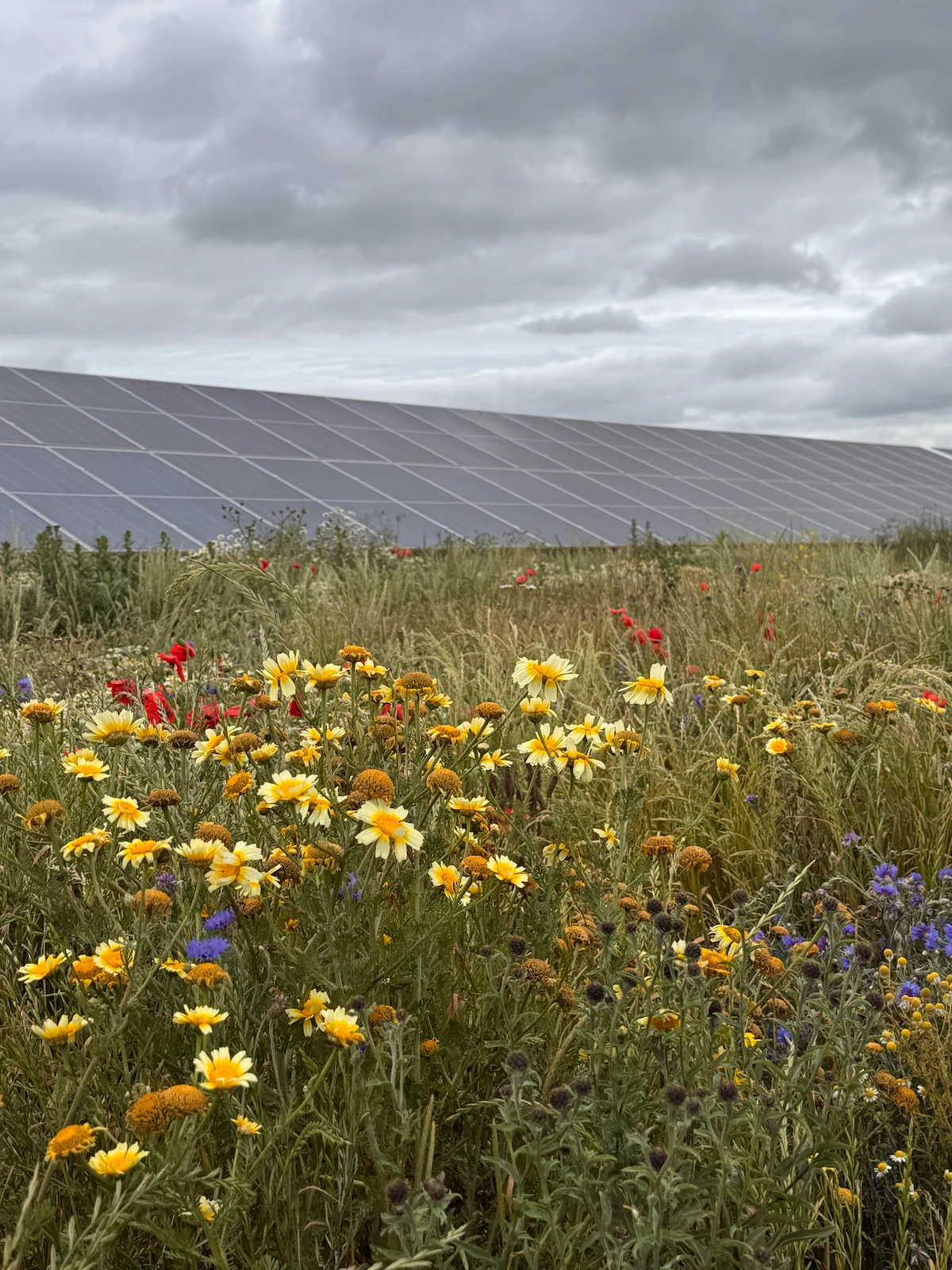
The site is expected to deliver 247% Biodiversity Net Gain, creating new opportunities for wildlife while enhancing existing habitats across the landscape. Existing hedgerows and mature trees have been retained and strengthened, while new habitats are being created to support pollinators, birds, bats and other wildlife.
Alongside renewable energy generation, the site contributes to the long-term recovery of nature through habitat creation, ecological monitoring and carefully managed land stewardship.
Protecting and enhancing habitats
A range of habitats are being created and enhanced across the site, including:
- Retention and strengthening of existing hedgerows and mature trees.
- Species-rich grassland and wildflower meadows.
- Native fruiting scrub to provide food and shelter for wildlife.
- A new species-rich hedgerow along the northern site boundary.
- Gap-filling planting to strengthen existing hedgerow networks.
- Wet grassland habitat associated with the site’s attenuation basin and swale.
- Long-term habitat management and ecological monitoring.
The site will also continue to be grazed, helping maintain habitat quality and supporting long-term biodiversity objectives.
Water and wetland habitats
Following community feedback during the development process, an attenuation pond was incorporated into the final design to help manage rainfall and surface water. The site also includes wet grassland habitat features designed to support local biodiversity and create additional habitat diversity across the landscape.
These features provide benefits for wildlife while helping the site respond to changing weather patterns over its operational life.
Voluntary bat surveys
As part of our commitment to understanding how nature responds to renewable energy development, Dengie Solar Park forms part of BSR’s voluntary bat monitoring programme.
These surveys help us measure the long-term impact of habitat creation and land management across our sites. By monitoring bat activity over time, we’re able to better understand how wildlife uses the habitats we create and manage.
Even where surveys aren’t required by planning consent, we’ve chosen to carry them out voluntarily. This long-term approach helps inform how we manage our sites and supports a wider understanding of biodiversity within renewable energy landscapes.
Existing hedgerows, mature trees and newly enhanced habitats help create connected commuting and foraging routes for bats across the site.
Working with the Bumblebee Conservation Trust
Dengie Solar Park is part of BSR’s wider partnership with the Bumblebee Conservation Trust, supporting habitat creation for pollinators and helping strengthen biodiversity across renewable energy sites.
The site’s species-rich grassland, wildflower meadows and native planting provide valuable feeding and nesting habitat throughout the year. Dengie also contributes to work supporting the rare Shrill Carder Bee, one of the UK’s most threatened bumblebee species.
Wildlife at Dengie Solar Park
The habitats at Dengie Solar Park support a variety of species commonly found across Essex's farmland and coastal landscapes. Ecological surveys have recorded birds including skylark, yellowhammer, corn bunting, linnet, starling, barn owl, robin, buzzard, red kite, common gull, red-legged partridge and common pheasant, alongside badgers and common and soprano pipistrelle bats. The site also provides potentially suitable habitat for hedgehogs and hazel dormice. Biodiversity monitoring will continue throughout the life of the project, helping us understand how habitats develop and how wildlife uses the site over time.
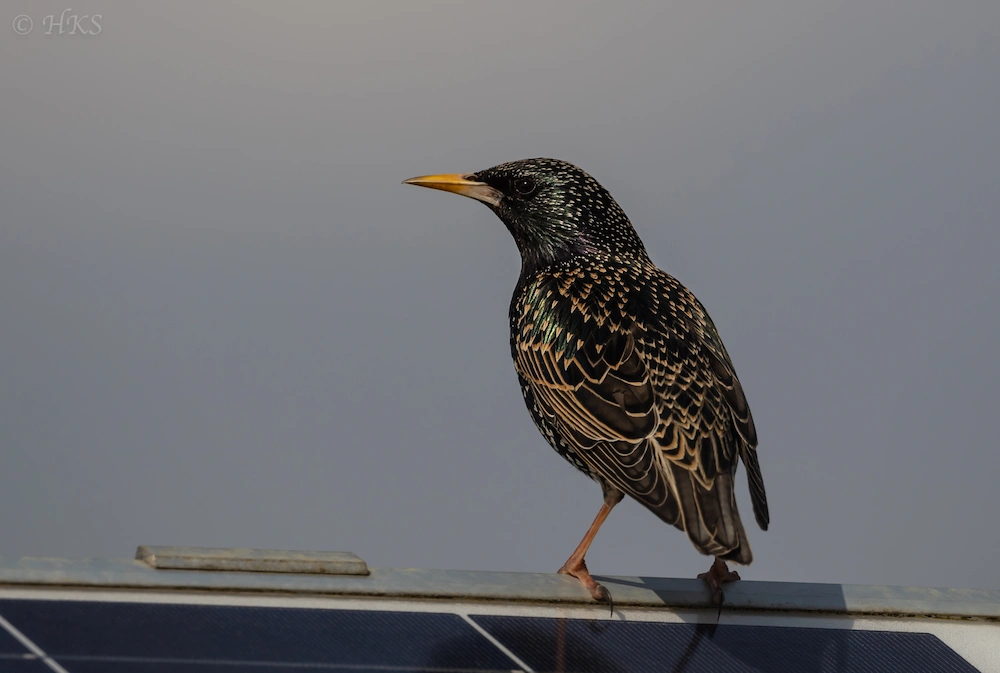
Starling
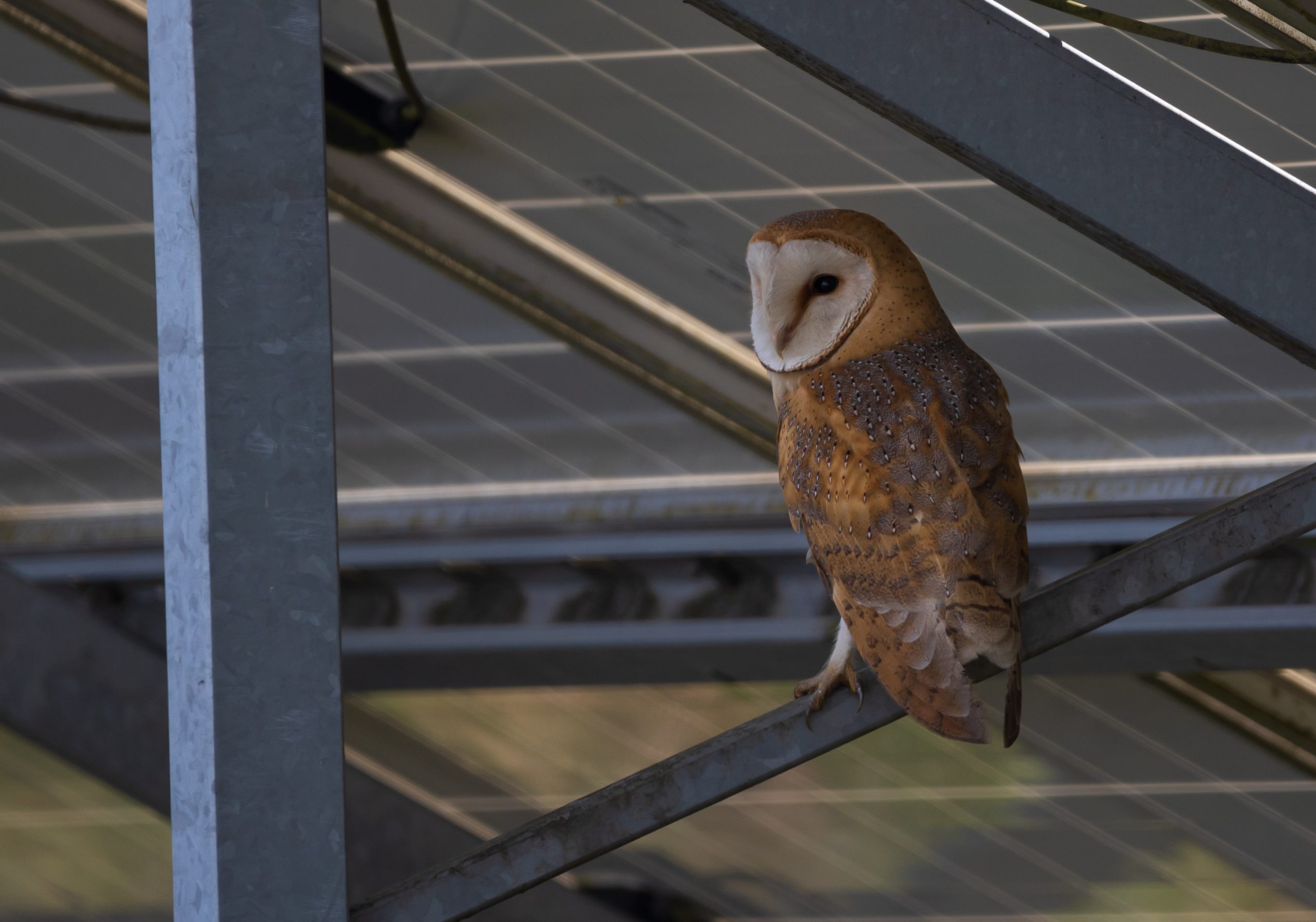
Barn owl
Stat References
Based on an annual average domestic consumption per household (Great Britain) of 3,799 kWh. Source BEIS, Regional and Local authority electricity consumption statics 2018.
Based on ‘Emissions associated with the generation of electricity at a power station (Electricity generation factors do not include transmission and distribution). Source BEIS, Greenhouse gas reporting: conversion factors 2020.