Little Crow Solar Park and BESS
Clean energy, storage and long-term care for the land
Little Crow is a nationally significant solar and battery energy storage project near Broughton in North Lincolnshire. The project is expected to generate around 169,800MWh of renewable electricity each year, enough to power approximately 44,696 homes, while avoiding around 39,587 tonnes of CO₂ emissions annually.
Alongside clean energy generation and storage, Little Crow has been designed to create and strengthen habitats, support local wildlife and protect the heritage of the landscape. As an independent power producer, we’ll own and operate the project for the long term, keeping us responsible for both the energy infrastructure and the land around it.
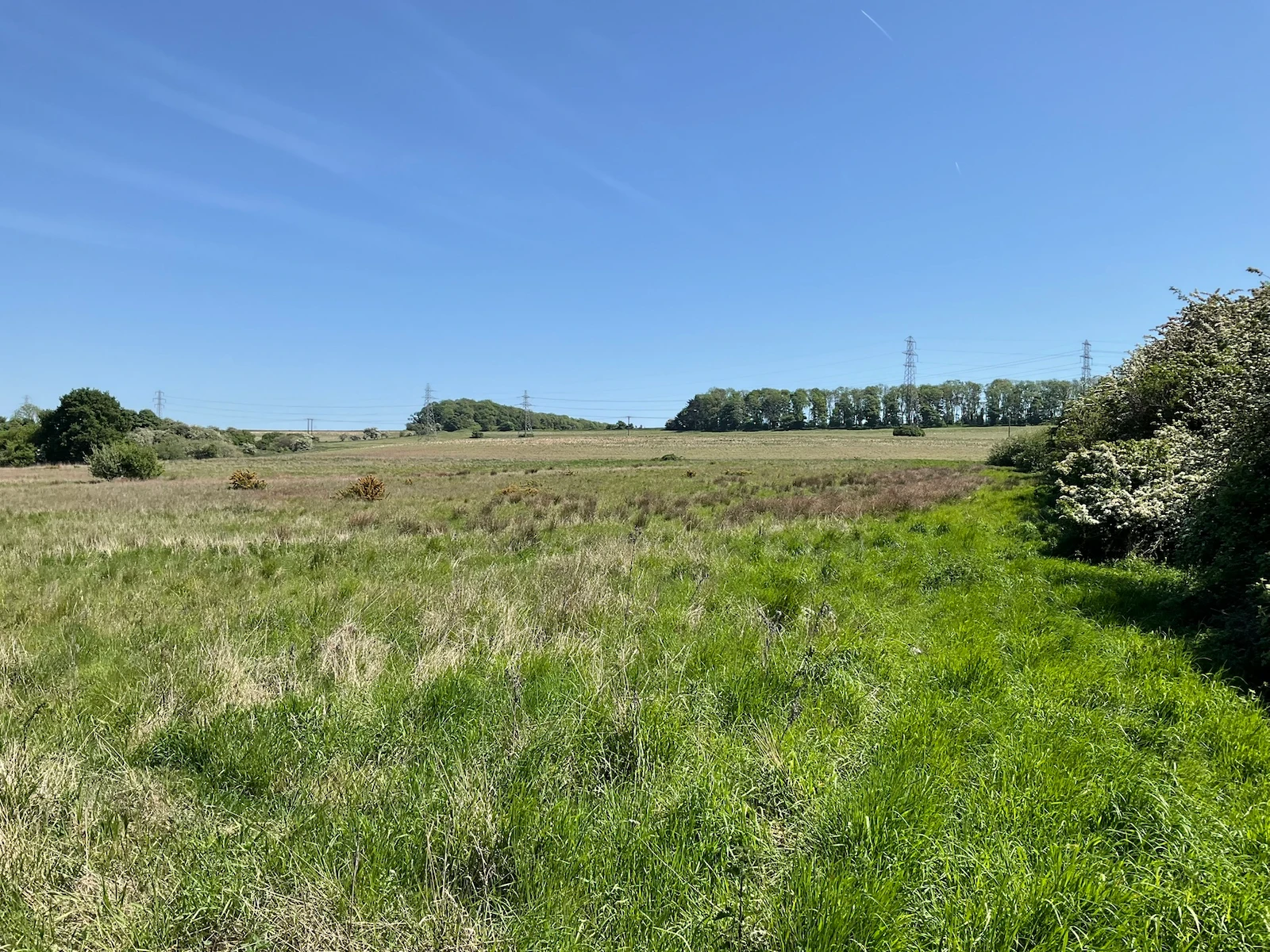
Follow Little Crow’s journey from development to operation
Project timeline
Little Crow received Development Consent Order approval from the Secretary of State in April 2022. The consent covers the construction, operation, maintenance and eventual decommissioning of the solar park, together with an on-site battery energy storage system of up to 90MW and the infrastructure needed to connect the project to the grid. Follow the timeline below to see how Little Crow is progressing through each stage of development.
Identify & survey
Finding the right land and grid connections, backed by in-depth feasibility and environmental studies.
Engage & tailor
Working with local authorities, parish councils, and communities to shape each proposal responsibly.
Approve & construct
Securing planning permission and delivering projects to the highest technical and environmental standards.
Operate & steward
Managing our sites for the long term, with biodiversity initiatives and a clear “leave no trace” approach.
Working with and for communities
Little Crow includes a £250,000 Community Benefit Fund to support improvements to community facilities across local parishes. The fund will be managed by the local council, helping ensure investment is directed towards priorities identified within the local area.
As a long-term owner and operator, we’ll remain responsible for Little Crow throughout its operational life, maintaining relationships with the communities around the project alongside the energy infrastructure itself.
Designed to work with nature
Little Crow combines renewable energy generation with long-term habitat creation and management. The project is expected to deliver 140% Biodiversity Net Gain, supported by new species-rich grassland, hedgerow planting and carefully managed ponds and watercourses.
Areas of former arable land will be seeded with locally appropriate native species, while parts of the site will continue to be cultivated specifically to help rare arable plants persist. Bird and bat boxes will provide additional habitat, and sheep grazing will form part of the site’s long-term land management.
Protecting rare plants
Little Crow is home to several notable plant species, including henbane, bee orchids, common spotted orchids and northern or southern marsh orchids.
To help protect this botanical diversity, selected areas will continue to be cultivated after traditional arable farming ends. This approach is designed to retain the conditions that rare arable plants rely on, alongside the new grassland and other habitats being created across Little Crow.
Supporting great crested newts
Great crested newts have been recorded at Little Crow, where ponds and the surrounding terrestrial habitats provide places for feeding, shelter and movement through the landscape.
Ponds and watercourses will be managed throughout the life of the project, including measures to protect habitat quality and prevent invasive species from becoming established. Specific great crested newt monitoring is planned at Years 5, 10, 15 and 20, helping us understand how the species continues to use the site.
Voluntary bat surveys
Little Crow forms part of our voluntary bat monitoring programme, helping us understand how bats use renewable energy sites and how activity changes over time.
Species recorded at Little Crow include common pipistrelle, soprano pipistrelle, noctule, Myotis species and brown long-eared bats. Bat boxes, new habitats and connected landscape features provide opportunities for feeding, commuting and roosting.
Bat surveys will continue as part of the wider ecological monitoring programme, with findings helping inform how habitats are managed throughout the life of the solar park.
How many species can you spot?
Wildlife at Little Crow
Little Crow supports a wide variety of wildlife across its grassland, hedgerows, ponds and surrounding habitats. Bird species recorded include skylark, yellow wagtail, lapwing, meadow pipit, reed bunting, yellowhammer, linnet, bullfinch, willow warbler, mistle thrush, song thrush, dunnock and kestrel. Brown hares and badgers have also been recorded, alongside common toads and great crested newts. The site also supports invertebrates including cinnabar moth, grayling butterfly, wall butterfly and small heath butterfly.
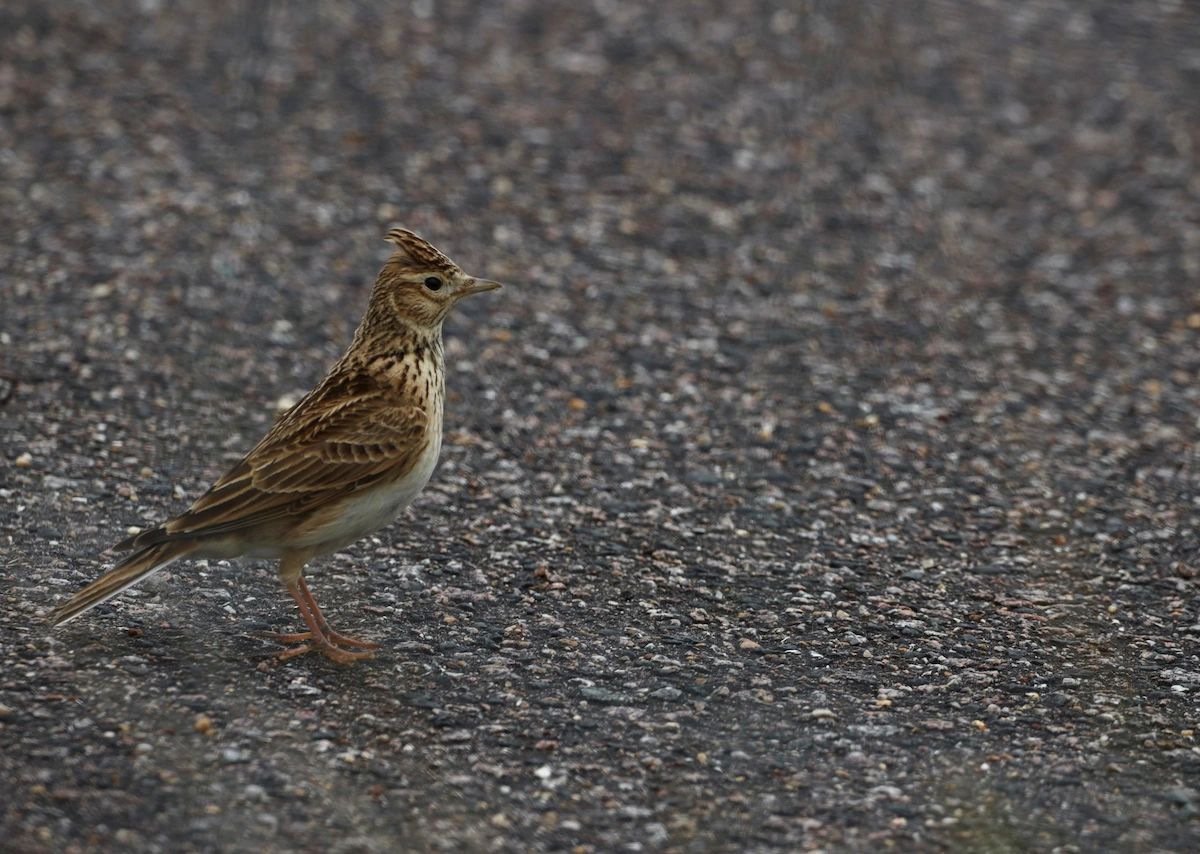
Skylark
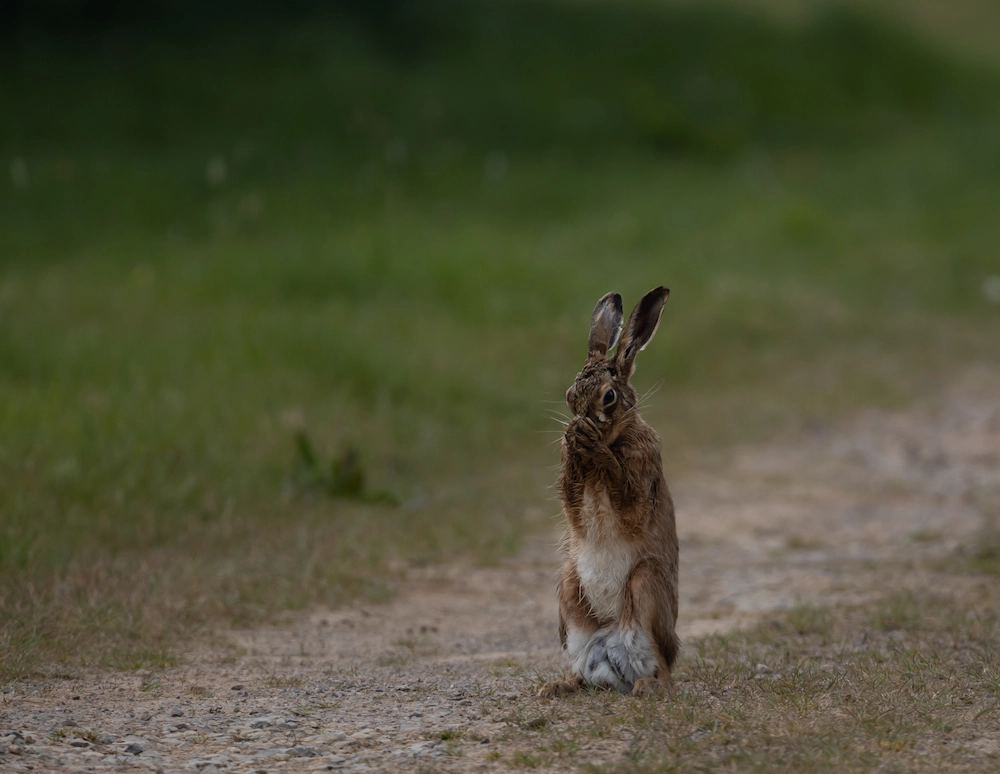
Brown hare
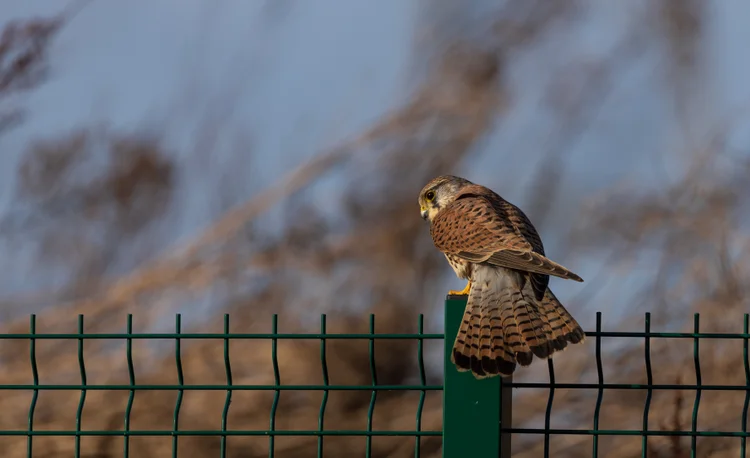
Kestrel
Monitoring nature over the long term
Creating new habitat is only the beginning. Ecological monitoring at Little Crow will continue throughout the project’s operational life.
Habitat and biodiversity monitoring is planned for Years 1, 2, 3, 5 and 10, and every five years thereafter. More targeted monitoring of birds, bats, butterflies, bumblebees and habitat features will take place at key stages, alongside the dedicated great crested newt programme.
This gives us evidence to understand how habitats are developing and helps inform their management as the landscape changes over time.