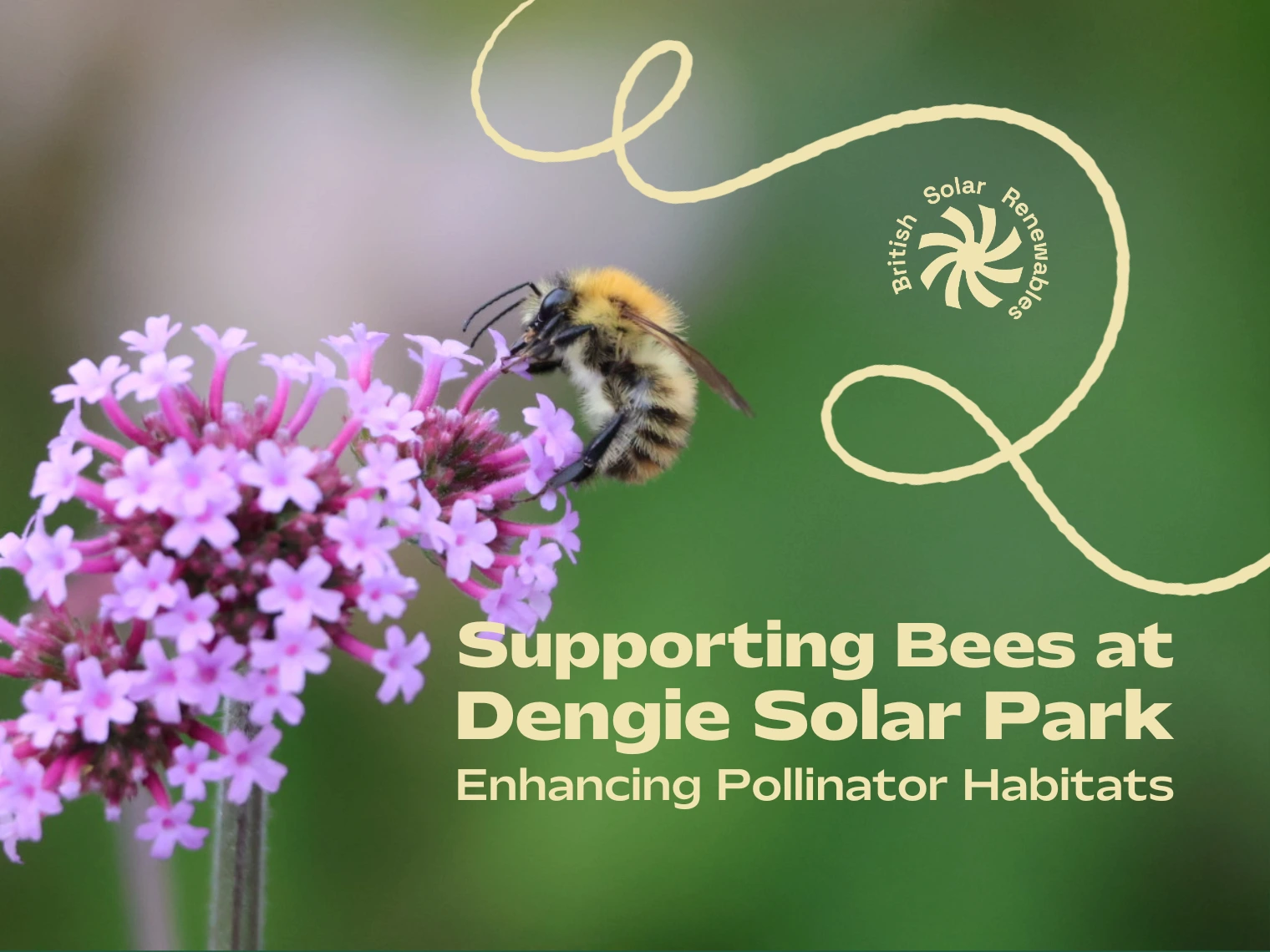
Supporting Bees at Dengie Solar Park: Enhancing Pollinator Habitats
Dengie Solar Park in Essex is turning 33 hectares of former arable farmland into a thriving, biodiverse habitat, with a special focus on supporting pollinators – especially bees. Informed by guidance from the Bumblebee Conservation Trust, the project is a powerful opportunity to support pollinator recovery in the region.
Our landscape plan is designed to restore and enhance essential habitats for pollinators. By increasing foraging resources, creating safe nesting spaces, and ensuring connected areas with minimal disturbance, we’re supporting not just pollinators, but the wider ecosystems that depend on them. It’s a meaningful step forward for biodiversity, and a long-term investment in the health of our natural environment.
Why Bees?
Bees are among our most vital pollinators, essential for growing the food we eat and sustaining healthy ecosystems. But many species are under threat, largely due to habitat loss and changing land use.
This landscape plan is our practical response. It’s been carefully designed to create the right conditions for bees to feed, nest and thrive, helping to reverse decline and support a healthier, more resilient natural environment.
How we’re supporting bees on site
Floral resources that last the seasons
For bees to thrive, they need access to nectar and pollen throughout the year — not just in peak months. That’s why the landscape plan includes a diverse mix of native, flowering species designed to provide continuous forage from early spring through to late autumn.
We’re planting:
- Wildflower-rich meadows, sown with native species that bloom across the seasons.
- Hedgerows and scrub featuring flowering species like hawthorn, blackthorn and dog rose — key sources of early-season nectar.
- A variety of plants to suit different pollinators, supporting the specific needs of both solitary bees and bumblebees at every stage of their lifecycle.
Supporting bee nesting and shelter on site
Bees don’t just need food. They need safe, undisturbed places to nest and raise their young. Many wild species nest in the ground or in natural cavities like old wood or stone.
Our plan includes:
- Areas of bare earth and tussocky grass, ideal for ground-nesting species.
- Deadwood piles and log habitats, providing essential spaces for cavity-nesting bees such as mason bees.
- Existing hedgerows and trees retained on site, offering natural structure, shelter, and stability over time.
Gentle land management for healthy bee habitats
Bees thrive in stable, low-disturbance environments. Our landscape management plan is designed to protect and nurture these habitats by minimising disruption and prioritising pollinator safety.
Key commitments include:
- Low-intensity grassland management, with rotational cutting schedules carefully planned to avoid disturbing nesting bees.
- Reduced pesticide use, focusing on non-chemical weed control methods to create a safer, healthier environment for pollinators and wildlife alike.
- This thoughtful approach helps ensure our site remains a welcoming home for bees and other essential pollinators.
Connecting nature: creating wildlife corridors for bees
Bees rely on safe routes to travel between feeding and nesting sites. Our landscape plan establishes wildlife corridors that protect and support their movement across the site.
This includes:
- Linking habitats with hedgerows, wildflower strips, and field margins, enabling bees to forage over a wider, connected area.
- Enhancing ecological corridors that allow pollinators to move freely through the landscape, helping to build stronger, more resilient bee populations.
By connecting nature, we’re helping pollinators thrive, supporting biodiversity and the health of ecosystems beyond the solar park itself.
Nurturing nature for thriving future
Protecting pollinators means more than setting up habitats. It requires ongoing care and attention. Our plan includes continuous monitoring to track habitat health and species presence, ensuring our efforts deliver real benefits for bees and wildlife.
We commit to:
- Regularly reviewing and adapting management practices to maximise positive outcomes for pollinators.
- Frequent site inspections to confirm the landscape supports thriving bee populations and biodiversity.
- Making improvements as needed to enhance habitat quality and resilience over time.
By staying vigilant and responsive, we’re safeguarding a healthy environment for pollinators now — and for generations to come.